• Antifascist Profiles; #3 Davide Cesare 1976-2003

    Antifascist Profiles; #3 Davide Cesare 1976-2003

    Davide, known to his friends as Dax, was a lorry driver and antifascist, from Rozzano, just outside Milan.

    He was murdered by fascists outside a bar on Via Brioschi in Milan on the 16th of March, 2003.
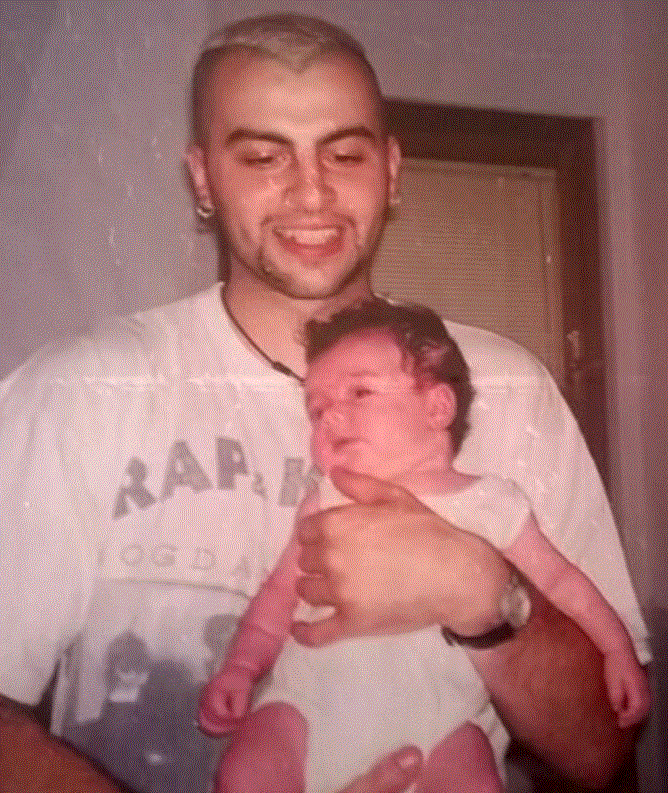
    Rozzano was a tough, working class neighbourhood, the type that could often be targeted by fascists, attempting to recruit disaffected young people to their cause. Dax was one of these youths briefly taken in by far-right ideas and aesthetics, before becoming an antifascist. In the documentary about Dax’s life, and the antifascist scene in Milan constructed around his memory –Brucia Ancora Dentro – a friend of Dax recalls;

    My first memory of Davide was him in a black bomber jacket, handing out right wing leaflets. My second memory of him is with a Keffiyeh around his neck, and so much will to fight.

    Davide and his friends moved from Rozzano to Milan to engage in wider antifascist struggle, and joined the ORSo collective, on Via Gola, in the Ticinese quarter of Milan.
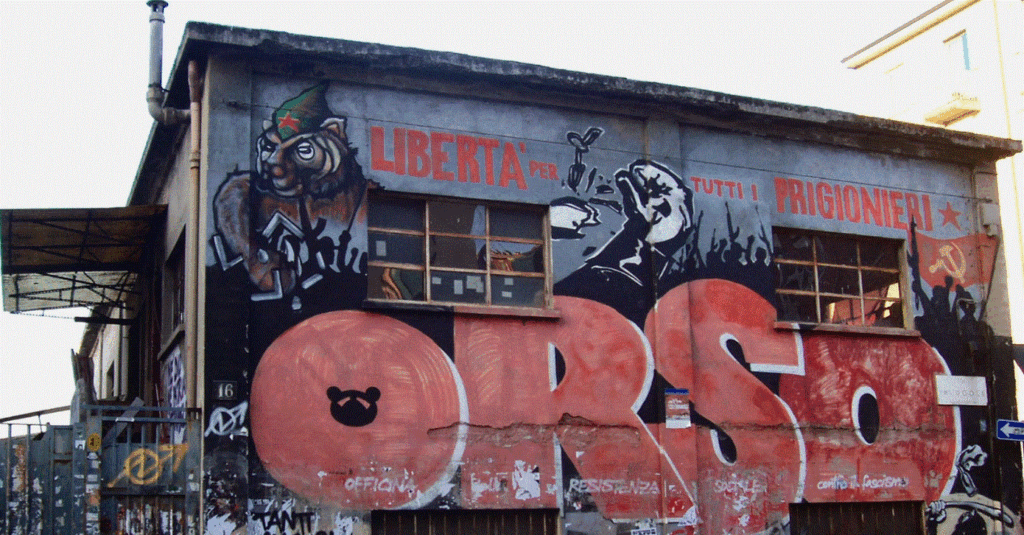
    ORSo – Officina della resistenza sociale (laboratory for social resistance)

    Via Gola and the surrounding area were full of squats and abandoned spaces where radicals could dream of and plan a better world.

    Dax was particularly drawn to the housing struggles of families in Ticinese, and fought against police during evictions. He was also active in AREA, the antifascist collective based at ORSo, involved in intelligence work and physical resistance against fascists, across Milan and beyond.
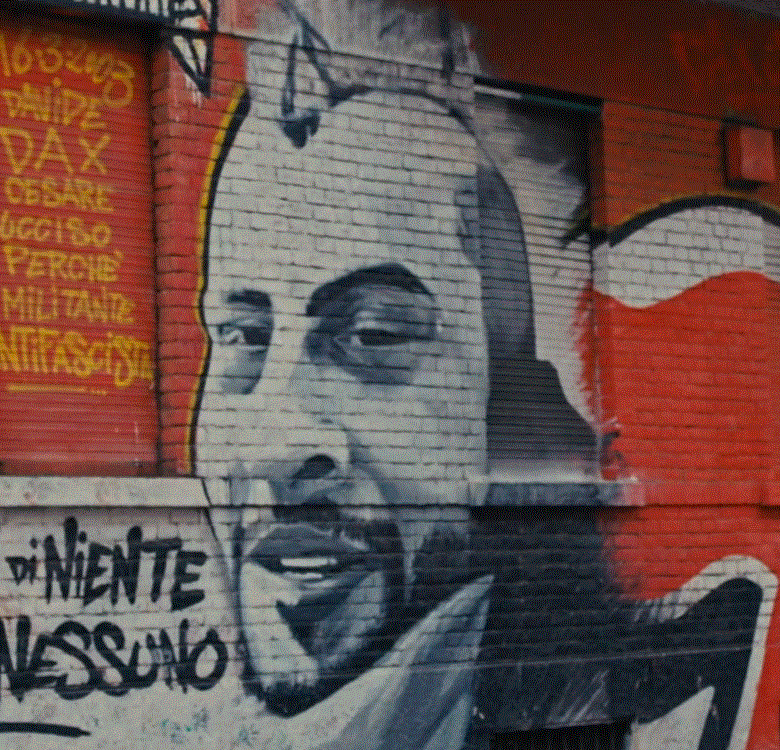
    Dax was also involved in R.A.S.H, where he was again in the front line of physical resistance to fascism.

    On the evening of the 16th of March, 2003, Davide and two friends were visiting a regular haunt, a bar on Via Gola, and were approached by fascists outside. Insults were exchanged, and as they clashed, with Davide in front, as always, the fascists pulled knives. One stabbed Davide in the throat. Davide and his friends were stabbed 19 times in total.

    His killers, a father and his two sons, well known for their fascist views, later admitted that it had been a premeditated attack.

    As Dax lay motionless on the floor, and and his comrades lay wounded beside him, their friends began to arrive. So did police and Carabinieri, who blocked the arrival of ambulances.

    Dax was eventually lifted into an ambulance and taken to hospital, where he was pronounced dead. The hospital was filled by Dax’s comrades – but also, by police, who began to taunt and mock the mourning antifascists. As this was occurring, riot police vans began pulling up outside the hospital.

    The night ended with many of Dax’s comrades wounded, blood spilled across the floor of the hospital. Beaten with weapons, by tens of police. Some subsequently had to undergo surgery, another suffered permanent kidney damage. Many lost teeth or had broken noses.
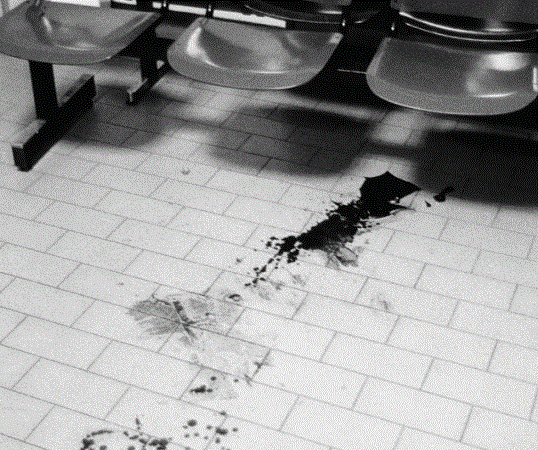
    Since Dax’s death, and these scenes at the hospital, now known as the Notte Nera, the antifascist movement in Milan has been constructed around the memory of Dax. This began with a corteo antifascista through the streets of Milan on the 22nd March, 6 days after Davide was murdered. Each year, to the current day, antifascists from Milan, across Italy, and beyond, march in Dax’s memory.
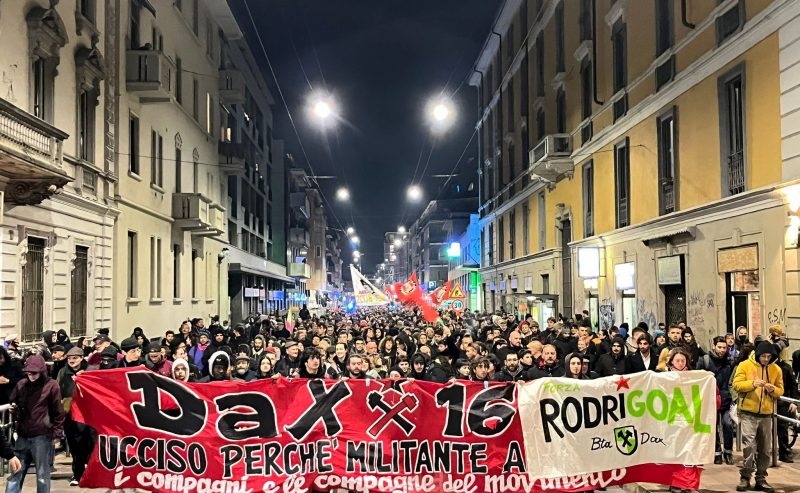
    Davide’s family and friends continue his struggle to this day.

    I had shared a piece of my life with Davide. We had walked side by side. So I chose to continue walking that path. His strength and his energy became part of me. From him, I inherited a family and friendships that became visceral and profound, and which I know I’ll never break from.

    In memory of Davide, on the 23rd anniversary of his death.
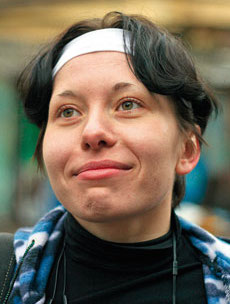
  • Antifascist Profiles; #2 Anastasia Baburova 1983-2009

    Antifascist Profiles; #2 Anastasia Baburova 1983-2009

    Anastasia Baburova was a journalist, anarchist, and antifascist, from Sevastopol in Crimea. She was murdered in Moscow in 2009, alongside fellow antifascist, Stanislav Markelov. She was 25 years old.

    Anastasia, known as Nastya by her friends, was a freelance journalist for Novaya Gazeta, known for its investigations into corruption and authoritarianism. Nastya was the third Novaya Gazeta journalist to be murdered, after Yuri Shchekochikhin and Anna Politkovskaya.

    She was an active antifascist, involved in street actions against the growing neo-Nazi movement across Moscow, during a time where antifascists were constantly outnumbered and openly attacked, whilst Nazi’s were supported by the state.

    As well as her antifascist activism, Anastasia was involved in many of the same environmental protest movements as Dmitry Petrov.

    In 2008, Anastasia published her investigations into Russian neo-Nazi groups, in Novaya Gazeta.

    Both her work and her activism placed her at risk of attack by fascists, and the increasingly authoritarian state. A state that had already proven its willingness to murder journalists, and would go on to murder other antifascists in collaboration with neo-Nazis.

    In the months leading up to her death, Nastya became increasingly aware of the danger she was in, taking up martial arts for self-defense, and talking to friends about her situation. She was clearly fully aware that she was likely to be attacked, or even killed. Days before her death she cryptically emailed her parents asking them to “love me, please.

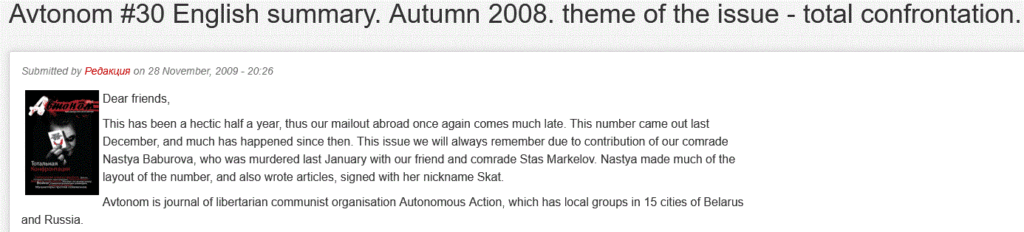
    In late 2008 Nastya had resigned from Novaya Gazeta, in protest at what she believed was an increasingly nationalist turn at the paper. She devoted the remaining days of her life to anarchist and antifascist activism, including contributing to Avtonom.

    On the 18th of January 2009, Anastasia attended an Avtonom event. The following day, she was murdered.

    She was leaving a press conference with Stanislav Markelov, on their way to the nearest metro stop. Before they made it there, a man appeared with a silenced pistol and fired three shots into Markelov. CCTV footage shows Nastya then moving towards the gunman before she herself is shot. She died in hospital later that night. Two of the shining lights of the antifascist movement in Russia had been extinguished at once.

    At the memorial to the pair, police marched in and broke up the event, attacking and arresting the attendees.

    The subsequent state investigations found that Nikita Tikhonov, a member of BORN, a Russian neo-Nazi organisation, was responsible for the murders, aided by his girlfriend, Eugenia Khassis. It is suspected that BORN was, at least, used and influenced by the Russian state.

    It is very likely that Markelov and Baburova were murdered by the Russian state, and that Tikhonov and Khassis may or may not have been the actual murderers. Khassis, who performed Nazi salutes at her sentencing, has already been released from prison.

    A documentary was made about Nastya’s life and death by director Valery Balayan, called Love me, please. The video clips featured in this article are all from this incredible work, which serves as a terrifying warning of what could be in store for the antifascist movement in western Europe – with authoritarian far-right parties on the cusp of gaining power everywhere.

  • Antifascist Profiles; #1 Dmitry Petrov, 1989-2023

    Antifascist Profiles; #1 Dmitry Petrov, 1989-2023

    Dmitry Petrov, also known as Ilya Leshy, was a Russian anarchist, antifascist, anthropologist and historian. In April 2023, he died fighting Russian imperialist aggression in the battle of Bakhmut. He was 33 years old.

    The best memory for me is if you continue to actively struggle, overcoming personal ambitions and unnecessary harmful strife. If you continue to fight actively to achieve a free society based on equality and solidarity. For you and for me and for all our comrades. Risk, deprivation and sacrifice on this path are our constant companions. But be sure – they are not in vain. – Dmitry Petrov’s final message

    Dmitry was active in the Russian anarchist movement from 2004. Initially focusing on housing and environmental activism, he gained the nickname “Ecologist” amongst his circle, whilst also becoming an active antifascist and engaging in street fights against Nazis across Moscow. He was also engaged in publishing, Food Not Bombs, and more.

    Dima, as Dmitry was known by many of his friends, was a co-founder of blackblocg.info, a media collective whose team participated in and reported on anarchist actions.

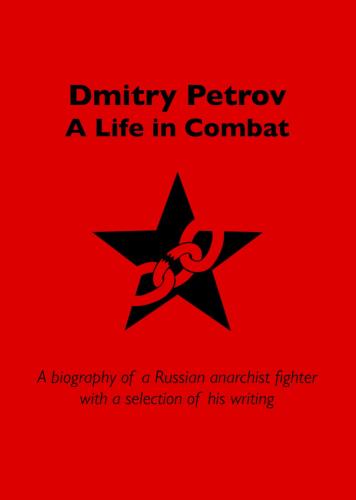
    The killings of our comrades Stanislav Markelov and Anastasia Baburova in the centre of Moscow by neo-Nazis was a turning point. We felt strongly that it was not just Nazi aggression, but a direct attack by the state, which was fostering and supporting our enemiesDmitry Petrov, A Life in Combat

    He was a participant in the Snow Revolution in Russia, the Slipper Revolution in Belarus, and the Maidan Revolution in Ukraine, of which Dmitry wrote a diary.

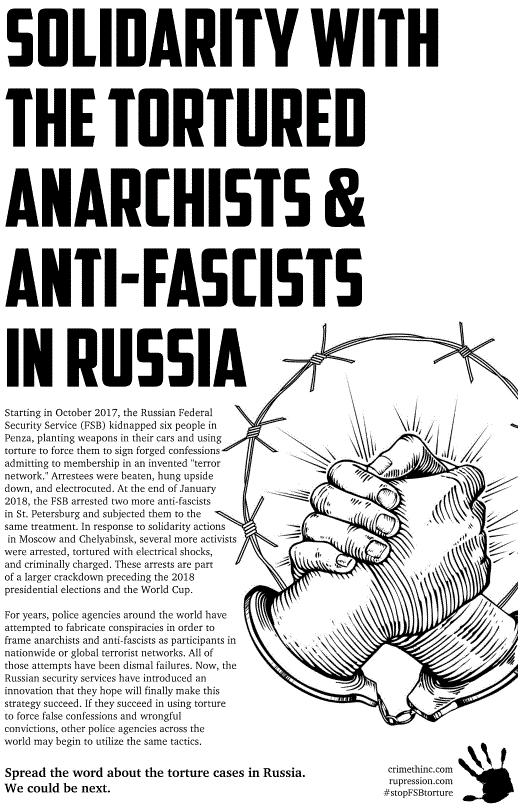
    He also wrote about the experiences of the anarchist and antifascist movements in Russia as they began to experience unprecedented repression from 2017 onwards. Repression that continues to this day.

    Dmitry also spent six months in Rojava, where he co-authored and edited the books Life Without a State: The People’s Revolution in Kurdistan and Desert Flowers: 10 years of the Rojava Revolution, and was the co-founder of Hevale, a media project on direct democracy and cooperative economics in the Middle East. Dmitry also participated in Kurdish self-defense units, and wrote extensively about his experiences, again often under a pseudonym.

    When departing Rojava, and discovering that he had attracted the attention of the FSB, and that he was at risk of prison or worse, Dmitry was faced with a difficult choice; he eventually chose not to return to Russia and his family and friends. He moved to Ukraine and became a resident of Kyiv.

    We want to remind all pessimists that there are no “objective” reasons for considering the social revolution and the triumph of libertarian ideas to be a matter of an indefinitely distant future. The speed and unpredictability of social changes in the modern world teach us one important lesson: everything is possible. Including freedom and justice.Dmitry Petrov, to be a Revolutionary

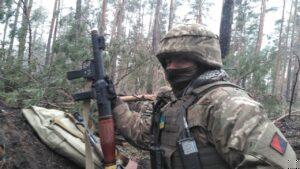
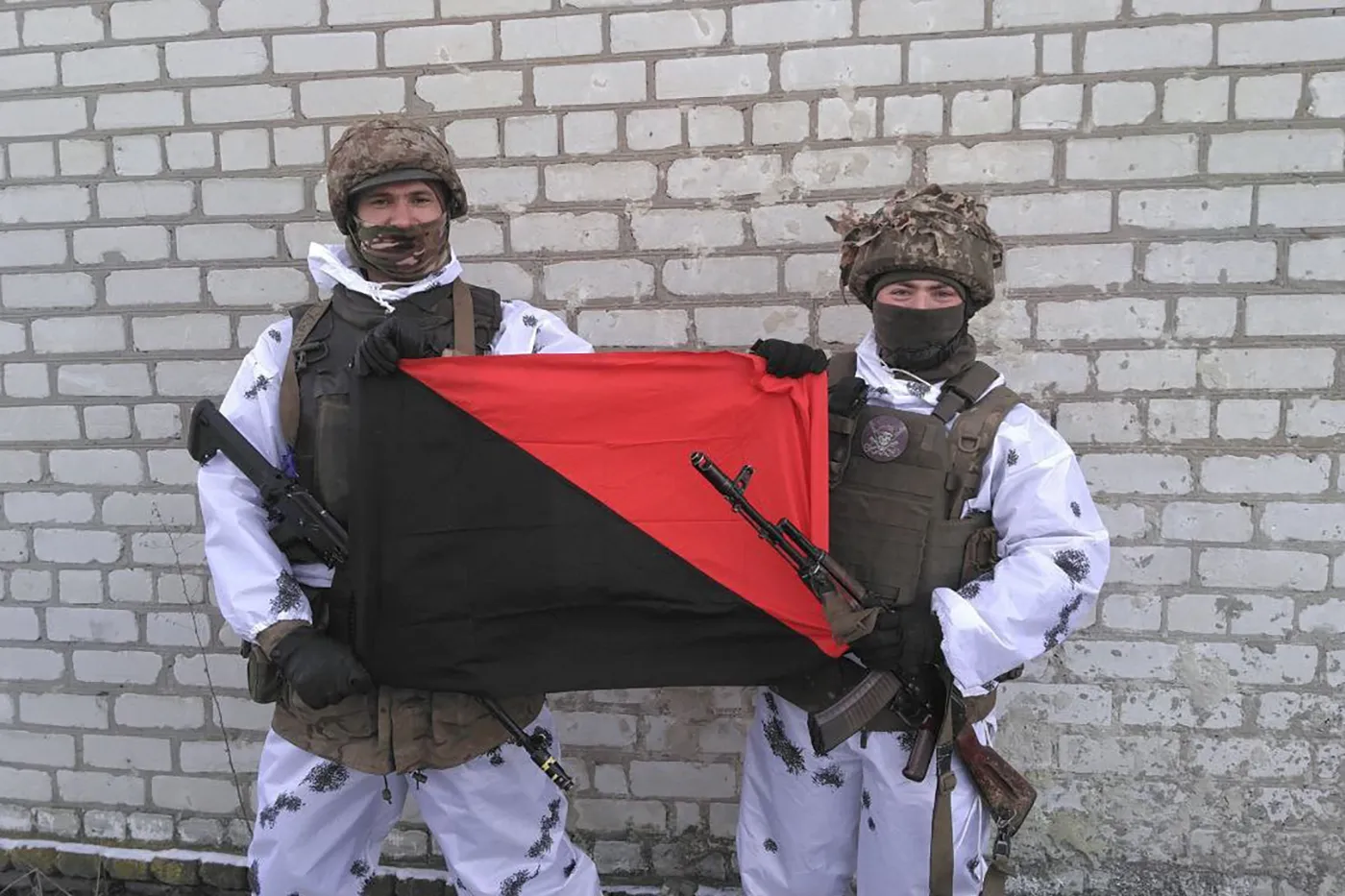
    Dmitry chose to fight alongside the Ukrainians against the Russian invasion, and was involved in the creation of the anti-authoritarian platoon, containing anarchists and antifascists from across the world.

    Dmitry was articulate in multiple languages, and videos and accounts of his time fighting in Ukraine are essential for anyone that wishes to understand that conflict from an antifascist perspective.

    After his death, Dmitry’s comrades revealed that he had been involved in many of the most significant anarchist initiatives in 21st century Russia, including the founding of the Combat Organization of Anarcho-Communists.

    There is an urgent need for radical change on the broadest possible territorial scale. We need a new world. Almost everything that exists in society is unacceptable and cannot serve as a framework for the present and the future. – Dmitry Petrov, The Mission of Anarchism in the Modern World

    Further reading:

    Leshy.Info – Website dedicated to the memory of Dmitry Petrov

    Crimethinc: In Memory of Dmitry Petrov

    Active Distribution: A Life in Combat, a collection of Dmitry’s writing

    Dmitry Petrov at the Anarchist Memorial Project